Soft washing is a Utica material-and-condition decision
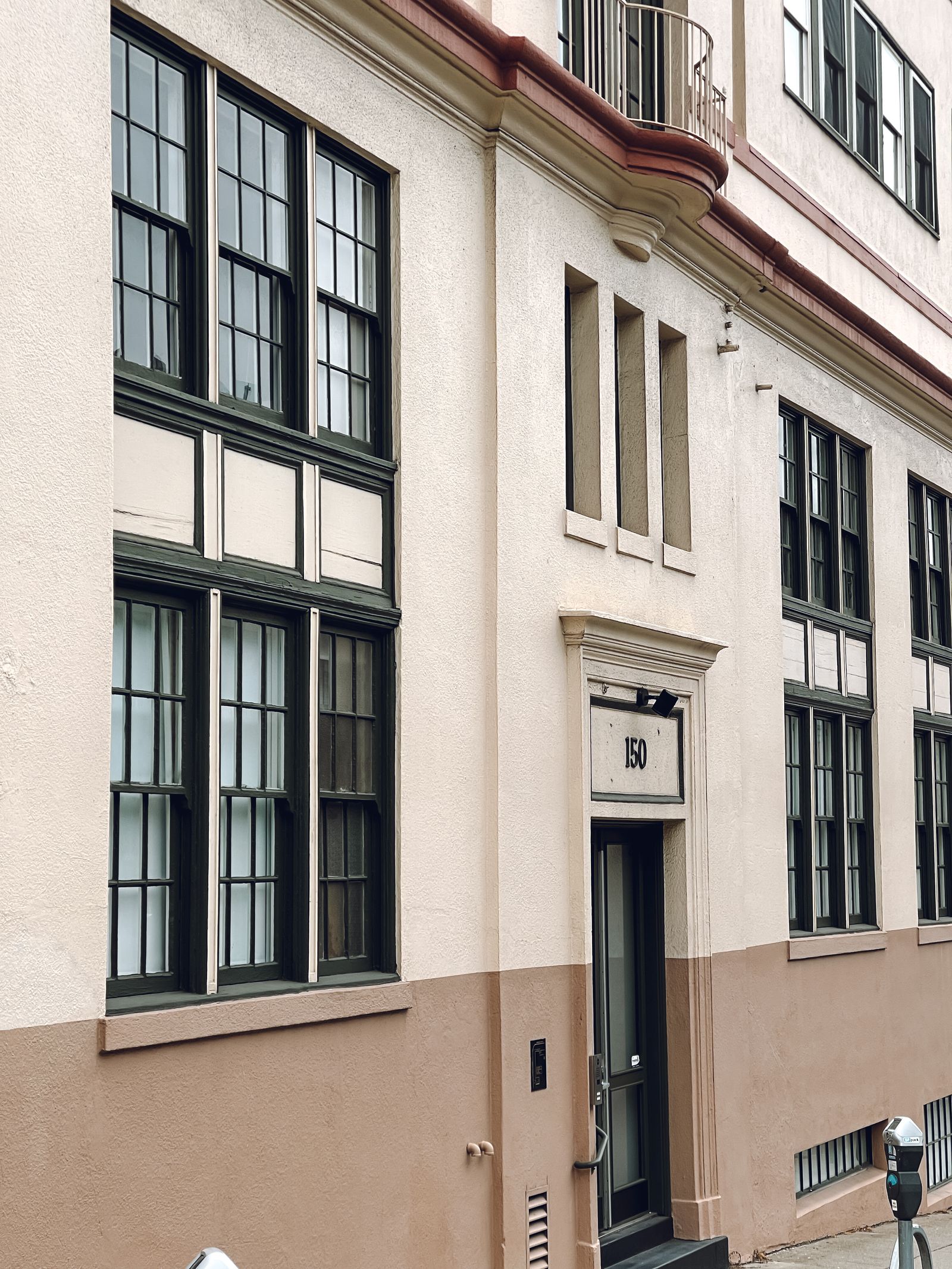
A soft-wash decision starts with the deposit and the facade assembly, not the name of the equipment. Compatible treatment may help on tested brick, masonry, painted concrete, stucco, EIFS, and similar zones carrying algae, mildew, pollen, bird residue, or atmospheric film. Reduced impact is useful, but chemical concentration, dwell time, temperature, wind, plant protection, overspray, and open joints still require control. On older downtown buildings and mixed-era facades near Bleecker Street or Genesee Street, a small test can show how original mortar, later repairs, salt, and freeze-thaw wear will respond before a full elevation is scheduled.
Utica walls often combine brick fields with stone trim, terra cotta, storefront glass, metal frames, awnings, cornices, canopies, and newer additions. A process that fits a sound brick wall may be wrong for a painted sign, soft stone, window frame, fragile joint, or decorative element. Define the result first: recurring appearance maintenance, organic-growth treatment, winter-residue reset, tenant turnover, or specialty restoration. The proposal should say what should improve, what may remain, and which conditions need preservation, repair, coating work, or another specialist.
Pressure washing has a narrower role on Utica commercial property
Pressure washing can fit selected sound concrete approaches, truck courts, garage floors, service yards, parking structures, sidewalks, and other durable hardscape after force, distance, flow, drainage, and surrounding activity are assessed. It should not be treated as the default for a Utica facade. Uncontrolled impact can erode historic joints, remove paint, scar soft stone, disturb a brick face, widen a defect, or force water behind a coating. Equipment capacity says little about whether the method fits the actual property.
Lower elevations along Route 5S, Oriskany Boulevard, the Thruway, parking areas, and loading zones may carry salt, sand, slush, soot, pedestrian soil, exhaust, and runoff marks. Upper walls may show pollen, mildew, rain streaks, and deposits under ledges. Hospitals, hotels, campuses, offices, and factories also have patients, guests, tenants, students, deliveries, forklifts, and public paths close to the work. Ask where pressure is proposed, why the material can tolerate it, what protection is required, and how the dry finish will be checked. A mixed-method scope is often more accurate than one setting for every surface.
Winter conditions change both method and schedule
Mohawk Valley weather affects how deposits form and whether a work window is usable. Snow, deicing salt, sand, and repeated freeze-thaw cycles concentrate soil around entrances, curbs, garage ramps, lower walls, and loading docks. A shaded downtown elevation can stay damp while an exposed industrial wall dries quickly. Properties near the Mohawk River, the Erie Canal, rail corridors, and open land can see wind and moisture that change overspray and drying. For an office, hotel, campus, or medical building, the cleaning method should be considered alongside the date of an inspection, event, tenant opening, or public-facing reset.
Cold masonry and open joints deserve particular care. Water driven behind a coating or into a vulnerable joint can create a problem that is not visible at the end of the shift. Snowbanks can redirect runoff, and ice can turn a small amount of overspray into an access hazard. Rain, snow, freezing temperatures, lightning, gusts, poor visibility, and wet walking surfaces are stop conditions to evaluate before and during work. A credible proposal leaves room to reschedule instead of treating the calendar as more important than the building and people around it.
Use a site-specific comparison for healthcare, campus, and industrial access
Method choice changes when access is occupied. At an MVHS property, the priority may be to keep an ambulance approach, patient entrance, air intake, and staff route clear while limiting mist and noise. At Utica University, SUNY Polytechnic Institute, or MVCC, the team may need to preserve class transitions, buses, accessibility, and athletic or event traffic. A hotel near downtown or the Thruway may need arrivals, luggage, housekeeping, and event guests separated from the work. A manufacturer along Route 5S or Oriskany Boulevard may need a truck court, forklift lane, fire route, and shift change to remain active.
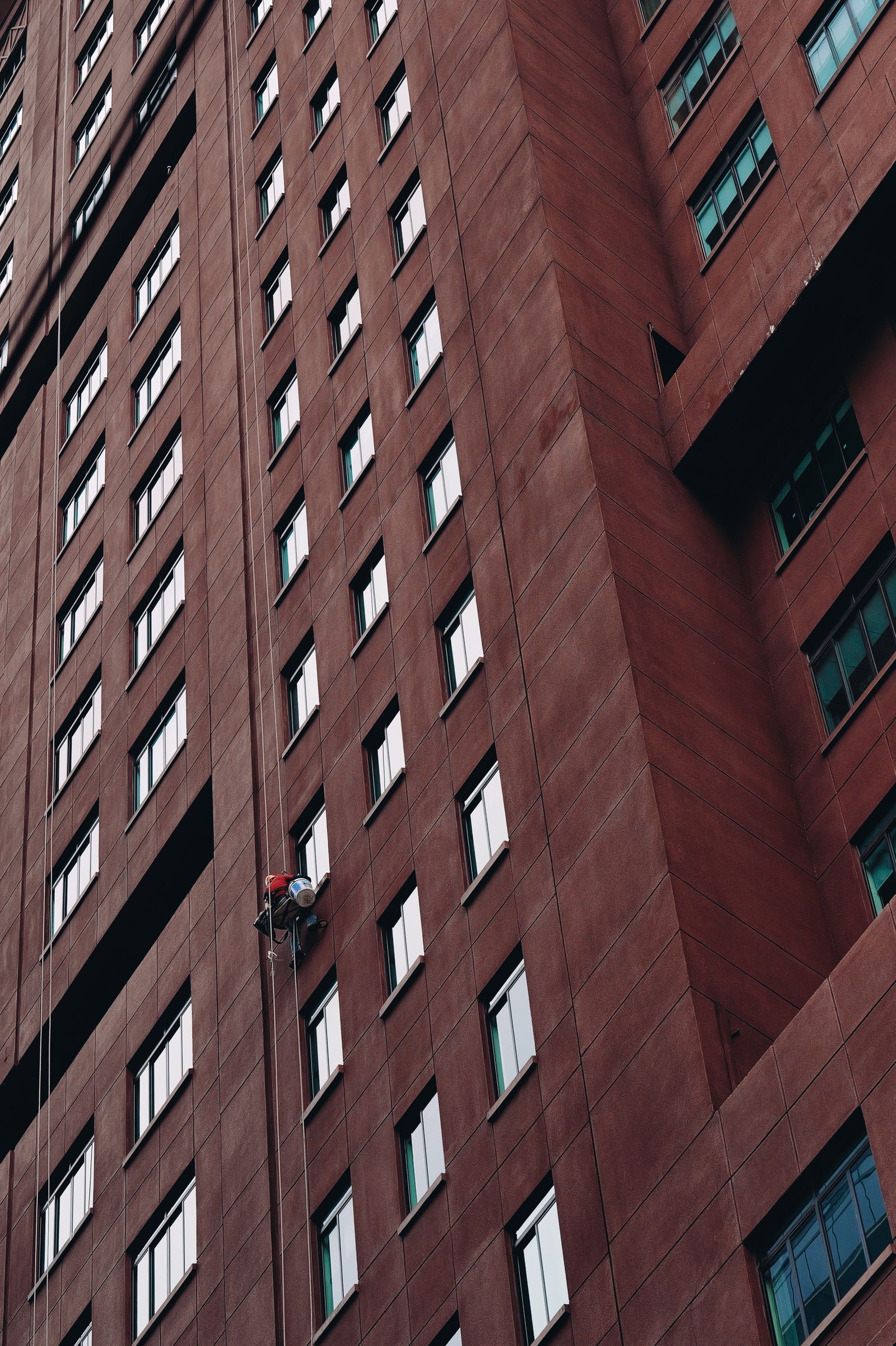
A pressure-washing setup can demand more hoses, containment, noise management, and water movement than an owner expects. A soft-washing setup still needs chemical protection, dwell control, rinsing, barriers, and a way to stop safely. Drone assistance may reduce access staging at suitable upper walls, but it does not brush, scrape, squeegee, polish, repair, or detail recesses. Compare the whole operation: substrate, deposits, height, public separation, water source, drainage, airspace, weather, and hand-detail requirements. The least expensive-looking method is not necessarily the least disruptive method.
Compare runoff before choosing a wash method
Pressure and soft washing can both create runoff that needs a plan. Utica properties may drain toward curb inlets, storm structures, basement doors, planted islands, parking-lot low points, or neighboring parcels. Winter residue and loosened soil can make lower-wall water different from a light upper-wall rinse. Before work, identify drains, grades, doors, air intakes, landscaping, vehicles, public sidewalks, emergency paths, and discharge limits. A visible grate is not automatic approval to send wash water into the drainage system.
The water-management response depends on chemistry, loosened deposits, rinse volume, slope, and site requirements. Possible controls include covering plants, reducing rinse volume, diverting flow, collecting or recovering water, filtering, and coordinating with the responsible authority. The method comparison should include who watches the flow, who can pause work, what happens during a downpour or snowmelt, and how the crew will leave entrances and paths safe. Runoff is part of choosing the method, not a cleanup detail added after the equipment arrives.
A practical Utica decision framework
Ask five questions before approving a cleaning method. First, what is the substrate and is it sound? Second, is the deposit organic growth, winter salt, mineral scale, soot, oxidation, runoff, or a combination? Third, which elevations need contact detail, and which are broad upper zones where aerial assistance could be considered? Fourth, how will patients, guests, tenants, students, drivers, neighbors, landscaping, air intakes, and drainage be protected? Fifth, what weather and dry-inspection conditions must be present before the owner accepts the result? The answers usually point toward soft washing, pressure washing, a hybrid scope, or repair before washing.
For a Utica quote, send the address, facade photos, approximate height, materials if known, stains, lower-wall and roofline views, access limits, operating hours, water source, drains, loading rules, and target date. Tell us whether the building is downtown, on a campus, near the river, in a retail corridor, or in an industrial area. Drone Building Cleaners can explain which surfaces are candidates for compatible soft washing, which hardscape may warrant controlled pressure, where hand detail or a lift is needed, and what should be excluded until a repair or preservation review is complete. Call +1 239-351-2897 or email contact@dronebuildingcleaners.com to get in touch.